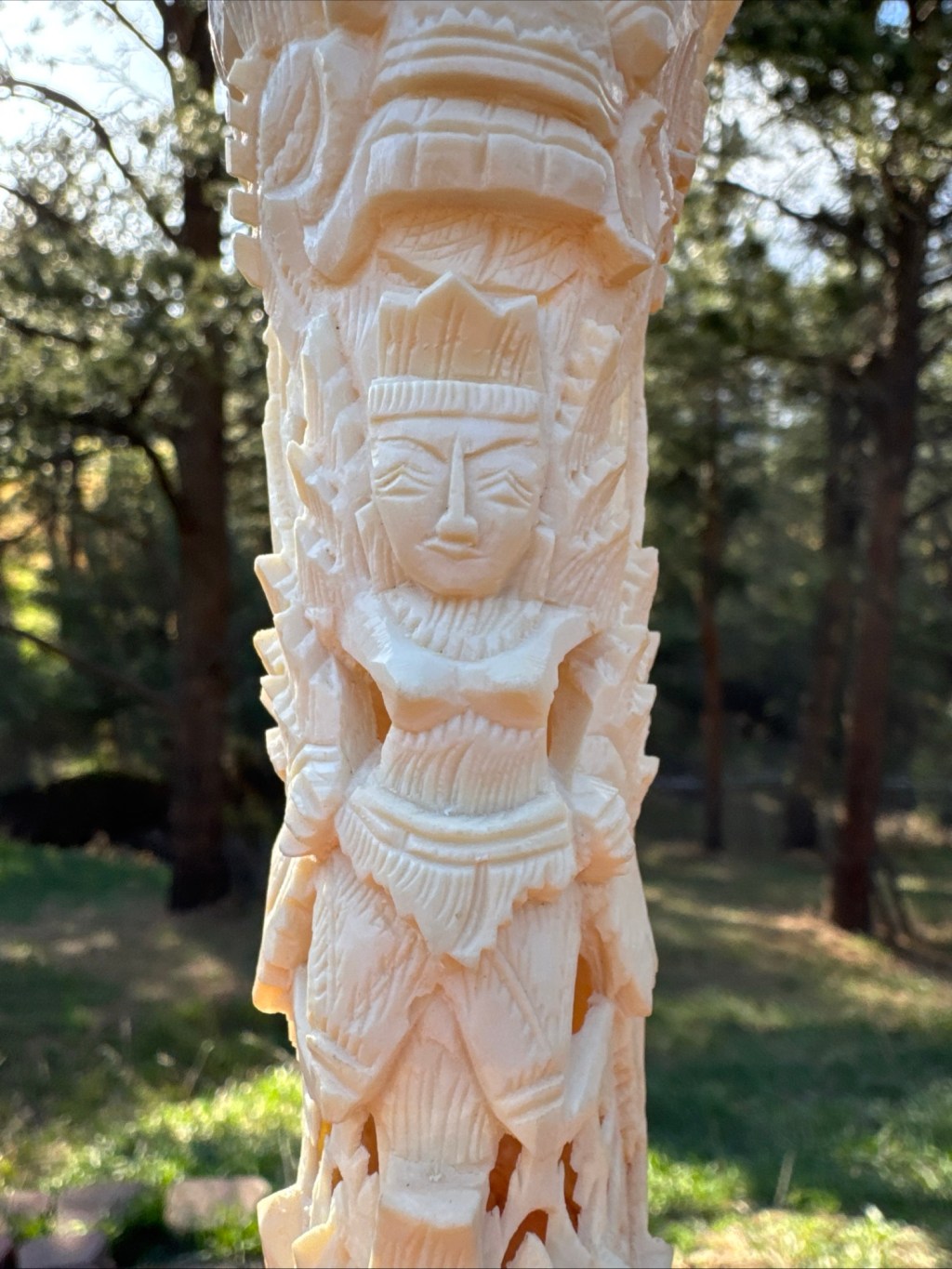
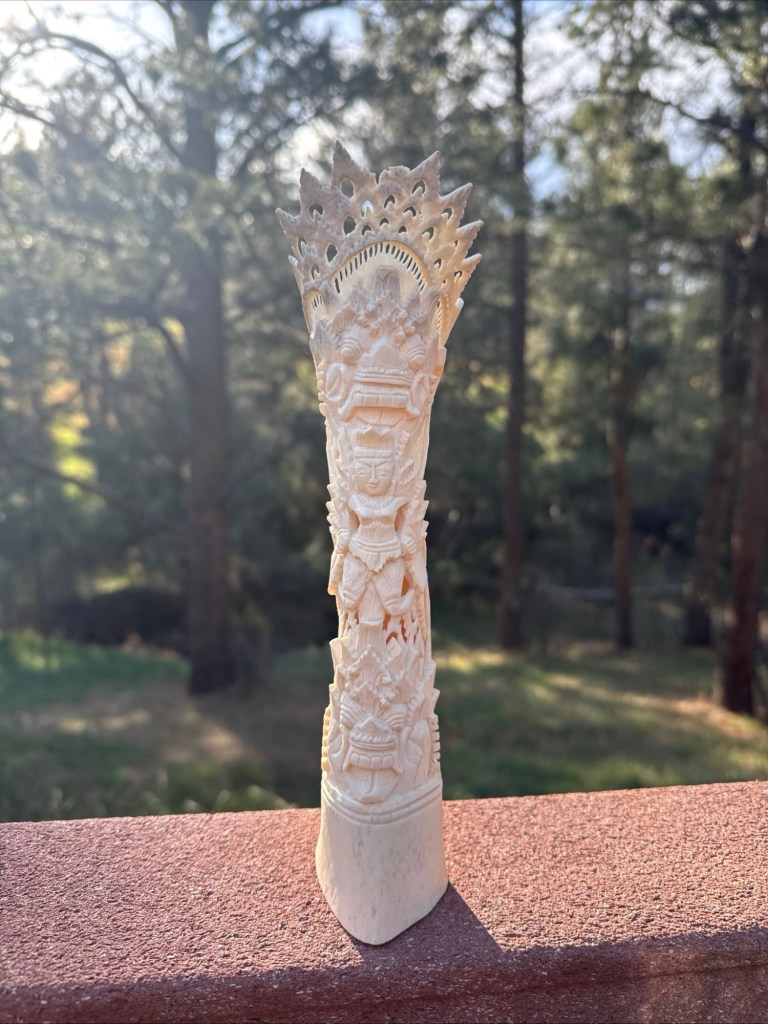
 Balinese bovine statue. Possible depiction: Barong, Dewi Sri and Garuda (c. 1960)
At first glance, a human-altered piece of animal bone can be off-putting. However, after learning about the rich history and profound spiritual connections that permeate Balinese culture, I developed a profound sense of reverence and awe for the rugged and natural beauty of this art crafted from animal bones.
Dating back to the pre-20th century, the Balinese culture has utilized both bone and wood carvings as religious and ceremonial vessels. Throughout the 1960s and 70s, carvings gained popularity for tourism and commercial purposes. Regardless of the time period, Balinese carvings continue to embody their enduring connection to spirituality and life.
Bone (bovine) caught my attention primarily due to the taboo and unsettling nature associated with its use. When confronted with a complex topic like this, it’s easy to get lost in a deep rabbit hole. Some of the questions that come to mind include: Is it legal? If so, which animal is it from? Was it sourced humanely?
First and foremost, this topic appears to be unfortunately clouded by the ever-present awareness that as humans, we have exploited animals to an alarming extent for our own personal gain. This exploitation has manifested in the collection and utilization of animal byproducts for various purposes, including tools, clothing, and art. For the purpose of staying on track with the article’s theme, I will refrain from delving into the distressing history of the ivory trade or the mass slaughter of the American bison, which was subsequently followed by the invasion of beef cattle. These topics will be explored in separate articles.
Fortunately, when examining Balinese culture, their animal choices are largely devoid of unsuitable or detrimental aspects. Water buffaloes, native to Bali, are a common sight on farms in the region. When a water buffalo passes away, every part is utilized. Beyond providing food for their families, the artwork created from these remains generates additional income for artisans who capitalize on this resource.
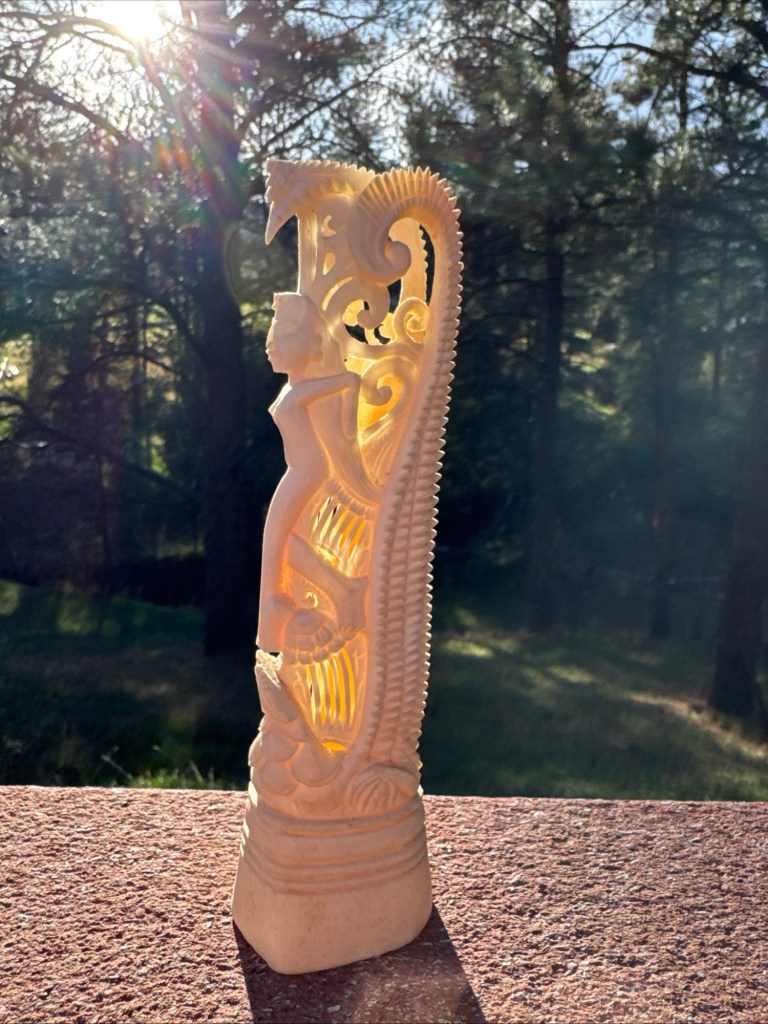
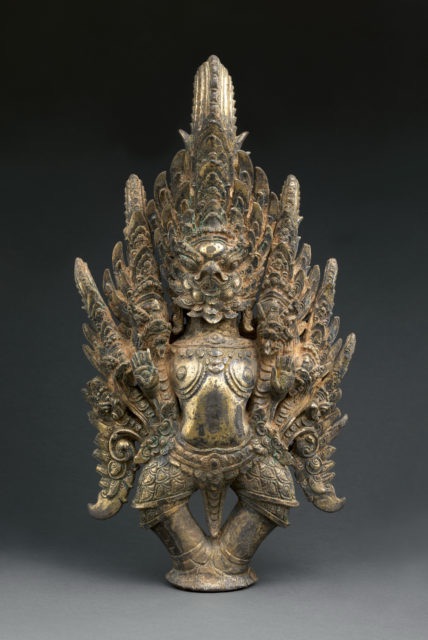
The act of carving itself is a sacred process. Artists often pray or meditate before starting, infusing each piece with positive energies and intentions. While the specific symbolisms vary among artists, common deities and themes emerge across their works. For instance, the image above depicts the possible portrayal of Barong, Dewi Sri, and Garuda. The image below features the same artist and Hindu theme.
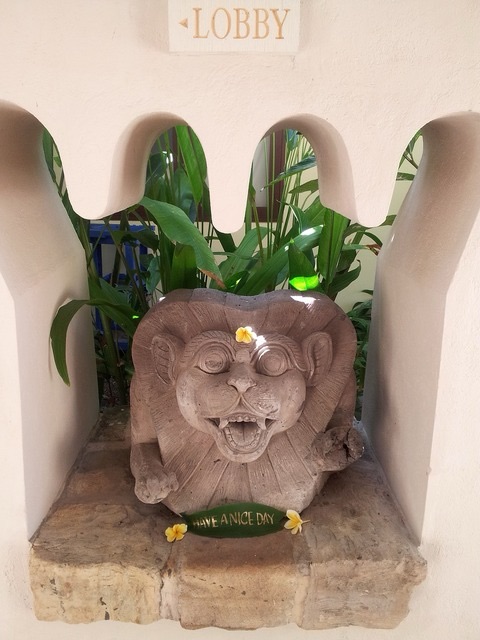
- Barong – The king of spirits. When found, Barong embodies protection and is used to ward off evil spirits. Placing him at entrances is common and is done to ensure safety and prosperity.
- Dewi Sri – She is the goddess of rice and fertility. May be placed at altars or in rice fields to signify blessings and usher in abundant harvests.
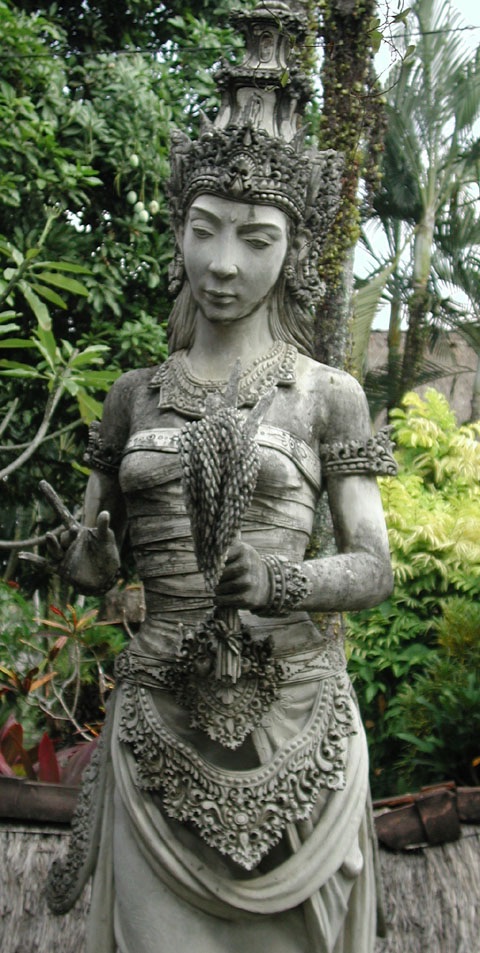
- Garuda – A bird like creature that was used as the vehicle to Lord Vishnu. This creature symbolizes freedom, courage, and might. When placed, it’s meant to inspire these qualities in its surroundings.
(Disclaimer: I am not a professional! This is a hobby and passion of mine. All things said here are my strong opinion and are no way intended to make claims or put any one party down.)
Sources:
 Bone & Co.